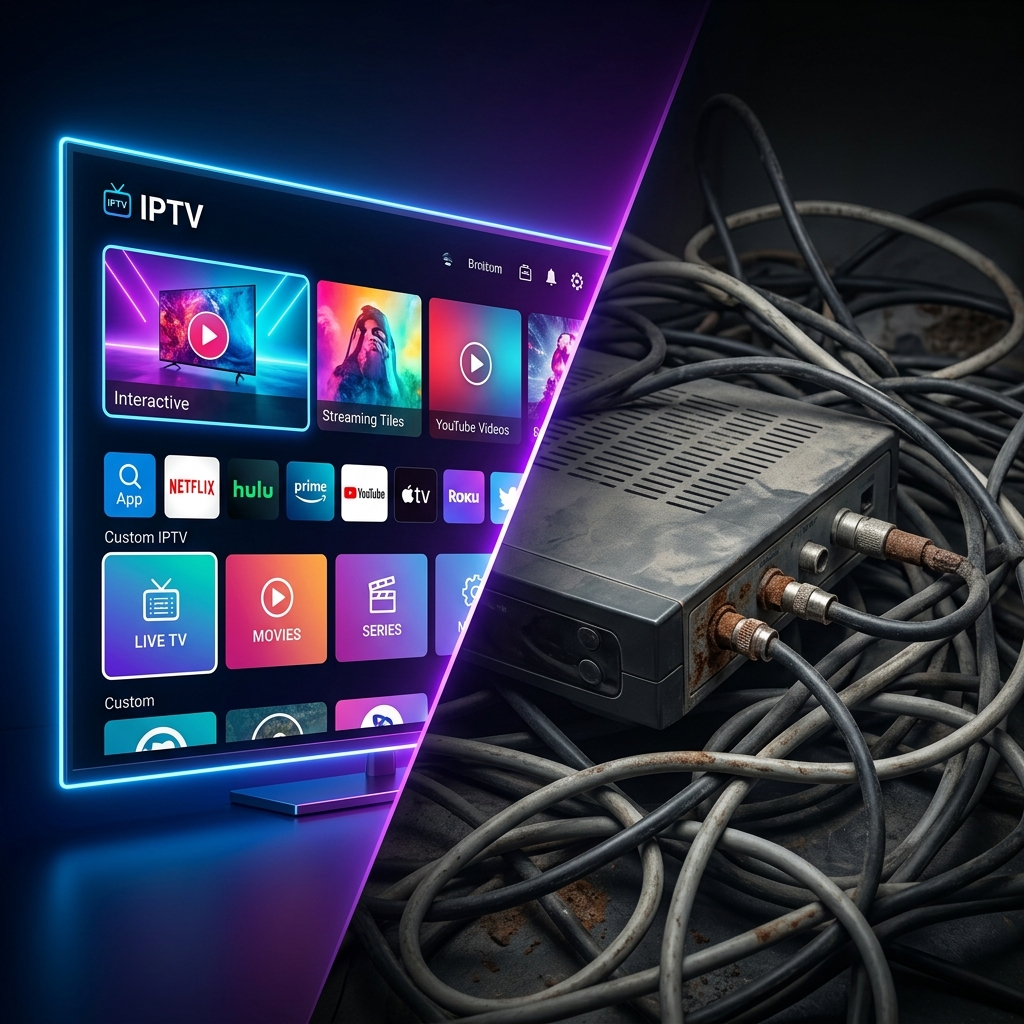
The era of the bulky cable box and the tangled mess of coaxial wires is officially coming to a close. Over the past decade, we've witnessed a steady decline in traditional television subscriptions, but in 2026, it is no longer just a trend—it's an exodus. If you're tired of hidden transmission fees, equipment lease charges, and watching channels you never asked for, you aren't alone. Millions are switching to affordable TV streaming, and they are doing it with the best IPTV solutions on the market. In the battle of IPTV vs Cable TV, it's becoming crystal clear which technology provides the ultimate value.
1. The Shocking Cost Difference: Affordability in 2026
When dissecting the decision to cut the cord, the primary driver is always finances. Traditional cable providers have historically operated in regional monopolies, allowing them to hike prices year over year. A typical premium cable package with sports networks easily exceeds €150 per month when adding "broadcast TV fees," "regional sports fees," and mandatory box rentals.
In stark contrast, modern IPTV delivers your channels over the internet. By bypassing the physical infrastructure constraints, users can access comprehensive global entertainment for significantly less. The complete IPTV setup guide will show you how gaining access to tens of thousands of channels, including all premium sports networks, can cost a fraction of a legacy cable bill. Cost-effective TV packages are no longer compromised in 2026.
2. Hardware Flexibility: Say Goodbye to Tying Down Devices
Remember having to call a technician to route a cable wire into your bedroom just to install a second television? Traditional cable ties your entertainment to a physical wall outlet and a rented set-top box.
IPTV completely liberates your viewing experience. IPTV (Internet Protocol Television) runs on applications across virtually any smart device you own. You can install an app on your living room Smart TV, bring an Android tablet on a plane, and pull up your smartphone on the train ride to work, all using the exact same subscription. If you have an Amazon device, learning how to set up IPTV on Firestick takes under five minutes and immediately turns any HDMI display into a powerhouse media center. Furthermore, you will never pay "equipment rental fees" again.
3. Unmatched Global VOD and Live Portfolios
Cable providers restrict content by geographical region. Unless you subscribe to extremely expensive international add-ons, you are confined to the localized broadcasting catalog.
IPTV is inherently global. A premium subscription like the one provided by Zyminex boasts channels from across North America, Europe, Asia, and South America under one roof. In addition to live TV, reputable IPTV services usually bundle an integrated Video-on-Demand (VOD) library, featuring thousands of the latest movies and complete TV series without needing six different streaming subscriptions across Netflix, Max, Disney+, and Hulu.
4. High Performance vs The "Cable Quality" Myth
A historical myth often perpetuated by cable sales representatives is that internet TV "lags" or buffers. While this may have been true in 2015 with cheap reseller panels, the modern landscape is vastly different. Today's top-tier services use advanced load balancing to prevent interruptions.
In fact, when configured properly with premium apps, the bitrate and image fidelity of a 4K direct stream eclipses heavily compressed traditional satellite and cable feeds. However, it is crucial to understand how to fix IPTV buffering issues which generally involves utilizing strong anti-freeze server networks and utilizing ethernet capabilities where possible for 60FPS sports.
5. Making the Switch Responsibly
Is cord-cutting 2026 a difficult transition? Absolutely not. But being an informed consumer is still paramount. The crackdown on illegal restreamers means you must choose a reliable, secure service. Ensure you use safe practices, perhaps understanding why courts are now blocking VPNs for some shady vendors, and aligning yourself with stable, high-end providers.
Written by the Zyminex Research Team
Experts in network engineering, cord-cutting economics, and smart tv media.
Frequently Asked Questions
Is it difficult to switch to IPTV?
No. If you have an internet connection and a Smart TV (or an Android box/Firestick), you simply download an app and enter the credentials provided by your service. It takes 5 minutes.
Do I need high-speed internet for IPTV?
Yes. For smooth 1080p and 4K streaming, a consistent connection of at least 30 Mbps is highly recommended.
Will I lose my local news channels?
It depends on the provider, but top-tier IPTV platforms categorize programming by city/state, supplying major regional news networks identical to cable.
How can I test an IPTV service before buying?
Almost all premium providers offer a testing window. We highly recommend grabbing an IPTV free trial to test the performance on your actual home network primarily.
Do I need a cable box to use IPTV?
No! You bypass rented hardware entirely by utilizing software apps available right through your television's native app store or a cheap streaming stick.